
As part of CSR-CMR’s commitment to building interreligious harmony, knowledge, and understanding, its head visited a Buddhist college in Wonogiri, Central Java (Sekolah Tinggi Agama Buddha Negeri Raden Wijaya, or STABN Raden Wijaya) at the rector’s invitation. STABN Raden Wijaya is one of Indonesia’s two public, or government, higher education institutions (the other is Institut Agama Buddha Negeri Sriwijaya Tangerang).
The rector of STABN Raden Wijaya invited him, in particular, to give a public lecture for students and lead a workshop for its lecturers. Yet, the visit was beyond a formal talk. CSR-CMR chairman had vibrant informal conversations with the college’s academic community, particularly its administrative, leadership, and teaching team, on multiple issues, including the possibility of future research and academic collaborations between STABN and UKSW through CSR-CMR.
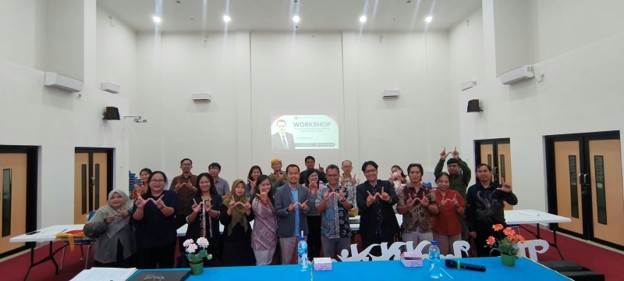
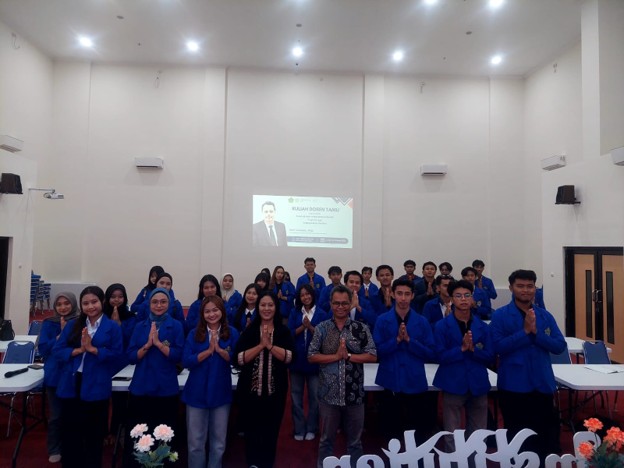
Possible research themes discussed include the multiplicity of Buddhism and Buddhist groups or Muslim-Buddhist relations in contemporary Indonesia. As stated in its vision/mission, CSR-CMR is committed to building fruitful interreligious study, dialogue, and engagement, not only between Christians and Muslims but also with other religious groups, both adherents of world religions and local beliefs, in Indonesia.
Notably, although it is a Buddhist college, many non-Buddhists study and work there (as both administrative and teaching staff), indicating the college’s religious plurality and tolerance. The vice rector said that more than 70 percent of students are non-Buddhists, especially Muslims. The leadership staff also said that they chose STABN as a place to study for a number of reasons, including (1) its status as a government higher education institution (and the only public college in Wonogiri), (2) cheap tuition fees, and (3) low living expenses.
During the public lecture, students were enthusiastic about asking questions about future scholarships for further study, both overseas and in their home country.