
Salatiga, November 19, 2026 – Interreligious harmony is fostered not only through dialogue and mutual respect but also through a shared responsibility to protect and preserve the natural environment. This message emerged at the opening of the International Symposium for Peace, Integrity, and Responsiveness to Eco-theology (Inspire 2026), jointly organized by the Center for the Study of Religion and Christian-Muslim Relations (CSR-CMR), Universitas Kristen Satya Wacana (UKSW), and the Center for Religious Harmony (Pusat Kerukunan Umat Beragama, henceforth PKUB) of the Ministry of Religious Affairs of the Republic of Indonesia. The event took place at UKSW in Salatiga on Thursday, November 19.
Planting Nusa Indah Trees to Strengthen Interreligious Harmony and Ecological Responsibility
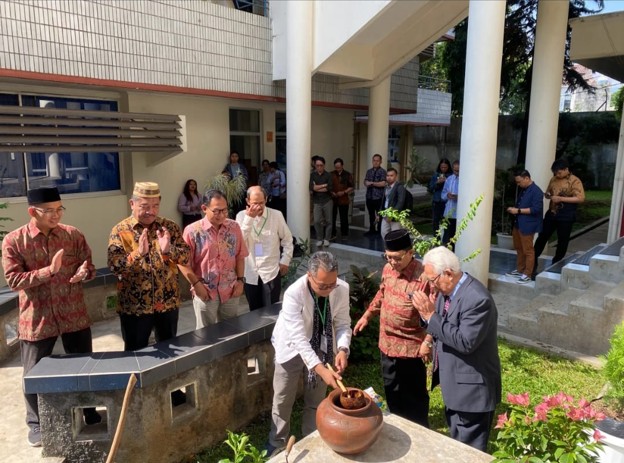
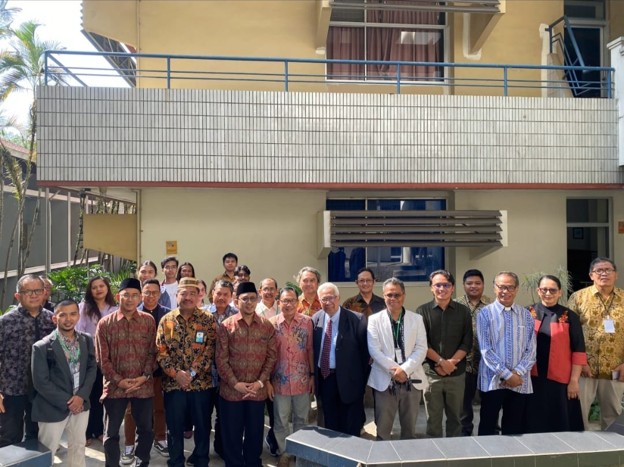
The international symposium opened with the planting of Nusa Indah trees as a symbol of diverse religious and faith communities’ shared commitment to fostering harmony while caring for the environment. The tree-planting activity affirmed that the earth is a shared home for all forms of life and must be protected beyond religious, cultural, and belief differences. Harmony is built not only through relationships among human beings but also through ecological responsibility to sustain life for future generations.
INSPIRE 2026 is an international academic forum that brings together academics, researchers, practitioners, religious leaders, government representatives, religious organizations, and civil society to examine the interconnectedness of interreligious harmony, peace, moral integrity, and ecological responsibility. This collaboration between CSR-CMR and PKUB represents a strategic partnership between an academic institution and the government to strengthen interreligious dialogue and encourage faith communities to help address humanitarian and environmental challenges.
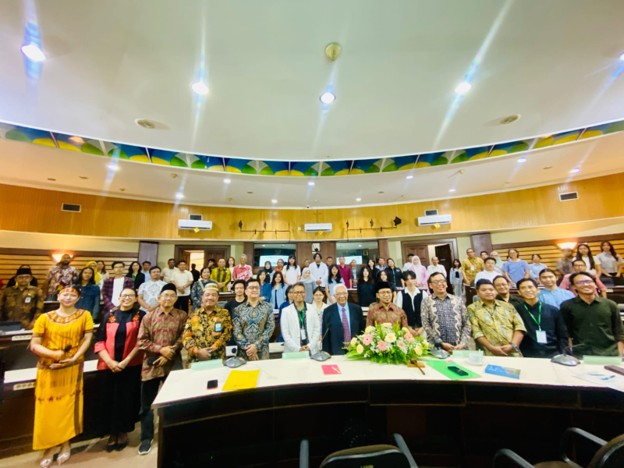
The opening ceremony continued with a performance of the Flobamora Harmony Dance, followed by the singing of Indonesia’s national anthem, Indonesia Raya, the Religious Harmony March, and the UKSW March. Institutional remarks were delivered by Sumanto Al Qurtuby (CSR-CMR Chair and INSPIRE 2026 convenor), Priyo Hari Adi, PhD (Vice Rector of UKSW); and M. Adib Abdushomad, PhD (Head of PKUB).
The Satya Wacana Declaration: Reaffirming Commitment to Interreligious Harmony
One of INSPIRE 2026’s key agendas was reading and signing the Satya Wacana Declaration of Interreligious Harmony. The declaration affirms a shared commitment to building a peaceful, inclusive, and mutually respectful society amid religious and faith diversity. Although religious traditions differ in their theological teachings and religious practices, they share fundamental values, including compassion, justice, peace, love for others, and respect for the sanctity of human life.
The declaration outlines four key commitments: (1) upholding freedom of conscience and the freedom to worship without coercion or discrimination; (2) fostering dialogue and openness by recognizing differences as blessings rather than threats; (3) standing together against hatred, prejudice, stereotypes, intolerance, and violence directed at religious groups and minorities; and (4) developing collective action for the common good, including supporting disadvantaged communities, caring for the environment, and promoting peace at the local level.
These commitments demonstrate that interreligious harmony cannot be achieved through tolerance alone. Rather, it must take concrete forms of cooperation to address humanitarian and ecological challenges. In this context, planting Nusa Indah trees serves as a tangible symbol of shared responsibility for caring for life.
Three Academic Panels: Connecting Harmony, Peace, and Ecotheology
Following the reading and signing of the declaration, INSPIRE 2026 continued with three academic panel sessions featuring scholars and researchers from various universities and institutions across Indonesia.
The first panel, moderated by Linda Susilowati, Ph.D., focused on harmony and peacebuilding in pluralistic societies. Topics included transforming organic tolerance into institutionalized harmony in Pabuaran Village, Bogor; the perspectives of Ibn Rushd and Thomas Aquinas on peace; Islamic ethics education and multicultural life in Islamic boarding schools (pesantren); interreligious youth camps; and Annuqayah Islamic Boarding School’s experience in developing interreligious environmental collaboration.
The second panel, moderated by Irene Ludji, Ph.D., explored interreligious harmony and collaboration rooted in cultural traditions and community life. Discussions covered the Balinese Suji tradition during the celebration of the Prophet Muhammad’s birthday (Mawlid al-Nabi) in Angantiga Muslim Village, Bali; interreligious literacy through the teaching of Hebrew in Islamic boarding schools; the cultural wisdom of the Donggo community in maintaining Catholic-Muslim harmony in Mbawa Village, Bima; and ritual-based religious moderation and pluralistic coexistence.
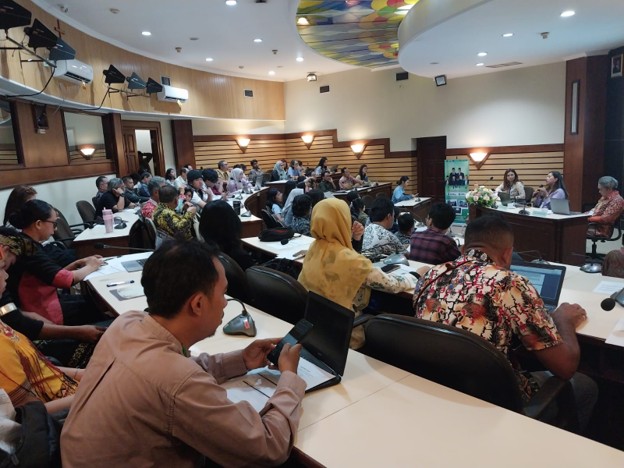
The third panel, moderated by Dr. Purwanti Kusumaningtyas, M.Hum., focused on ecology, interreligious peace, moral integrity, and social resilience. Topics included interfaith ecological practices facilitated by the Interreligious Harmony Forum (FKUB) in Purwakarta; the construction of moral integrity in peace discourse; the resilience of Muslim communities in Karimunjawa; the relationships and adaptation of indigenous belief communities in Cilacap; pluralism as a philosophical foundation for moral integrity; and solidarity among religious institutions in responding to climate change.
Together, the three panels showed that interreligious harmony can be strengthened through dialogue, education, cultural traditions, and collaborative action to address social and ecological challenges.
Through INSPIRE 2026, CSR-CMR UKSW and PKUB of the Ministry of Religious Affairs reaffirmed the importance of cultivating harmony that goes beyond merely acknowledging differences and translates into solidarity and shared responsibility. Religious differences should never become barriers to caring for the earth, because building peace and protecting the environment are shared responsibilities of all humanity.
*Rev. Dr. Gunawan Suprabowo contributed to this report