
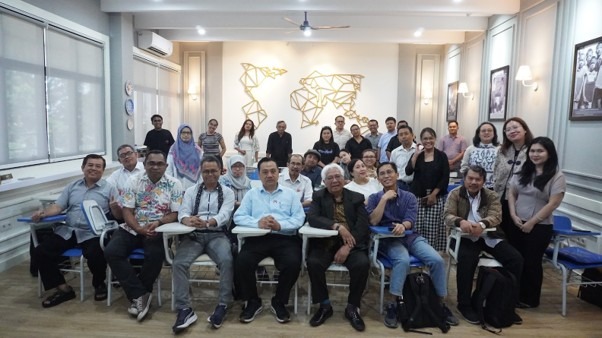
CSR-CMR and the Research Center for Religion and Belief (PRAK) of the National Research and Innovation Agency (BRIN) held a Sharing Session on their collaborative research project on Central Java’s Penghayat Kepercayaan (local belief) community. Moderated by Dr. Petsy Jessy Ismoyo (CSR-CMR Deputy Chair), the event took place on Monday, October 19, 2026, at the O. Notohamidjojo Library.
In his welcoming remarks, Sumanto Al Qurtuby, CSR-CMR Chairman, thanked the participants and partners and noted that the session presented the results of the two institutions’ joint research. He added that the collaboration will continue with more intensive follow-up in the coming years, including joint publications. Dr. Aji Sofanudin, Head of PRAK-BRIN, described the event as more than a seminar: a shared space to understand Indonesia’s religious diversity, particularly the Penghayat communities of Central Java. He also outlined the communities’ history, the history of religious governance policy, the legal status of Penghayat, and PRAK-BRIN’s 2026 research agenda.
Prof. Izak Y. M. Lattu, Ph.D., Dean of the Faculty of Theology UKSW, recounted the research journey on Penghayat communities in Central Java, including earlier ideas for a center for Indonesian indigenous religions (agama asli). He stressed that UKSW’s long-standing attention to pluralism and multiculturalism means this topic is not new to the university, and expressed hope for further collaboration between CSR-CMR and PRAK-BRIN. He then officially opened the discussion.
Opening the session, Dr. Petsy Jessy Ismoyo raised a central question: now that the state has formally recognized Penghayat communities, are they treated on an equal footing with Indonesia’s major religions?
Zakiyah, presented research on the politics of inclusion of Penghayat in social and policy spaces in Jepara, Surakarta, and Cilacap, using interviews, observation, and document study.
Following Constitutional Court Decision No. 97/PUU-XIV/2016, which allowed belief identity to be recorded in civil documents, Penghayat are recognized symbolically but still do not fully participate in political life. Only a small number have changed their national ID cards, and not all are represented in the Interfaith Harmony Forum (FKUB) in Surakarta and Jepara. Inclusive elections and formal political party membership are not yet visible, while Cilacap appeared more active in policy participation than the other two.
Moreover, Mustolehudin, presented research conducted in Surakarta and Sukoharjo, areas known as centers of Javanese Kejawen tradition. He highlighted that legal recognition does not automatically erase everyday stigma. Social distance is low in impersonal public spaces but high in intimate and doctrinal ones. Communities face demographic pressure from weak regeneration, marriage pressure, and job barriers, yet maintain social cohesion through practices such as srawung (socializing) and gotong royong. His policy recommendations include integrating Penghayat into FKUB, auditing digital public service applications, and diversity education.
Why does not everyone change their IDs? Umi Masfiah presented findings from Banyumas, where the civil registry office has institutionalized the service for belief identity. Even so, some residents choose to delay or not change their ID. Reasons include fear of stigma, family relations, concern about losing social assistance such as PKH, and the feeling of being different from their surroundings. Rev. Dr. Agus Supratikno (CSR-CMR Faculty Affiliate) presented findings from Pati across four areas: identity changes on ID cards, marriage and death registration, access to education, and political rights. His data drew on interviews with Sedulur Sikep communities, a focus group discussion with Pangestu leaders, and interviews with government institutions.
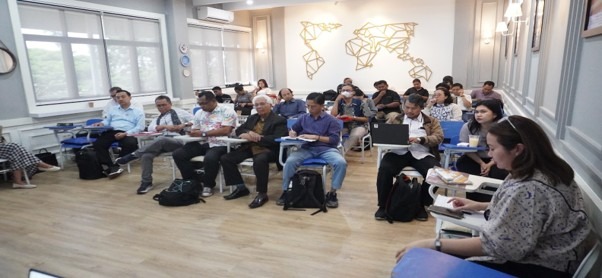
The presentations were followed by a Q&A session, in which the audience engaged directly with the speakers. Graduate students (Master’s and Doctoral) from the Faculty of Theology, members of CSR-CMR UKSW, researchers from PRAK-BRIN, and lecturers from the Faculty of Theology attended the event.
Through this sharing session, CSR-CMR and PRAK reaffirmed their commitment to continue collaborating, hoping the findings will deepen understanding of Penghayat communities and support more substantive inclusion as equal citizens.
*Chelsey Gaspersz contributed to this report.